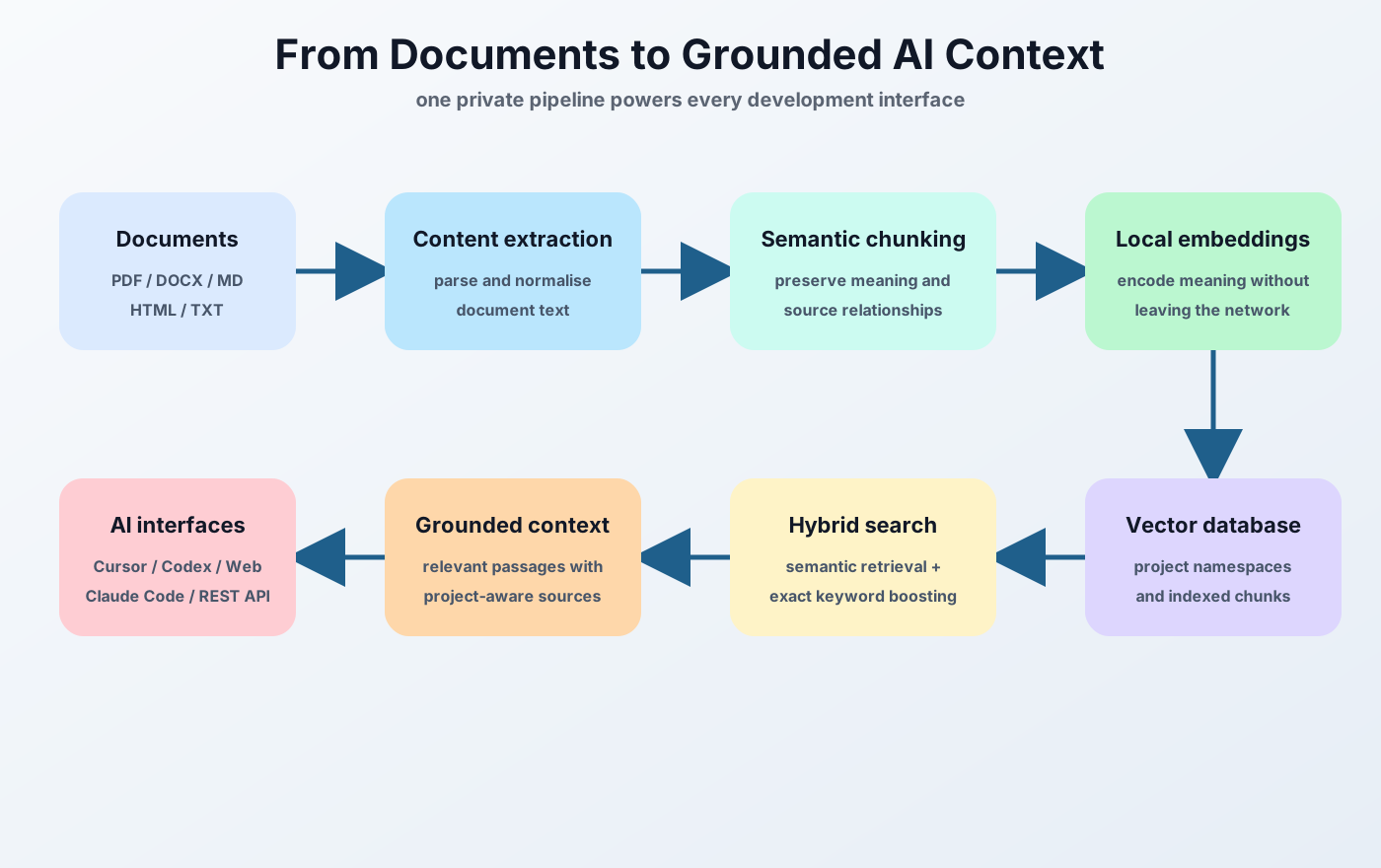
Keep knowledge inside
Run storage, parsing, embedding, and retrieval in the environment your organization controls.
Private teams and growing organizations
Private knowledge for teams
Your knowledge stays private. Your AI stays informed.
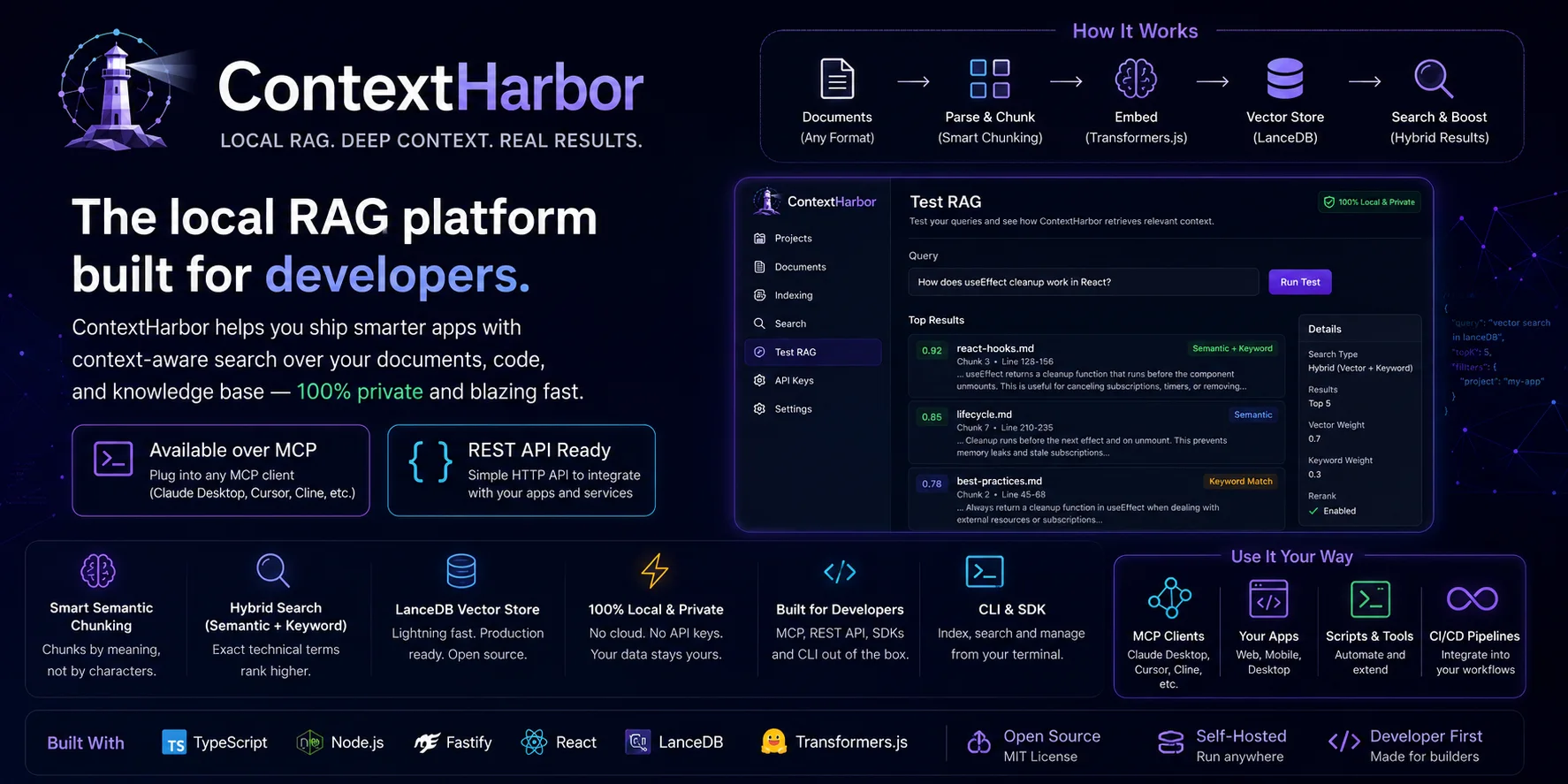
ContextHarbor turns your documents and organizational knowledge into private, source-backed context for your team, applications, and approved AI tools, deployed on infrastructure you control.
Who is this for?
Private knowledge flow
The harbor boundary makes ingestion, retrieval, storage, and access visible as one system instead of a loose collection of tools.
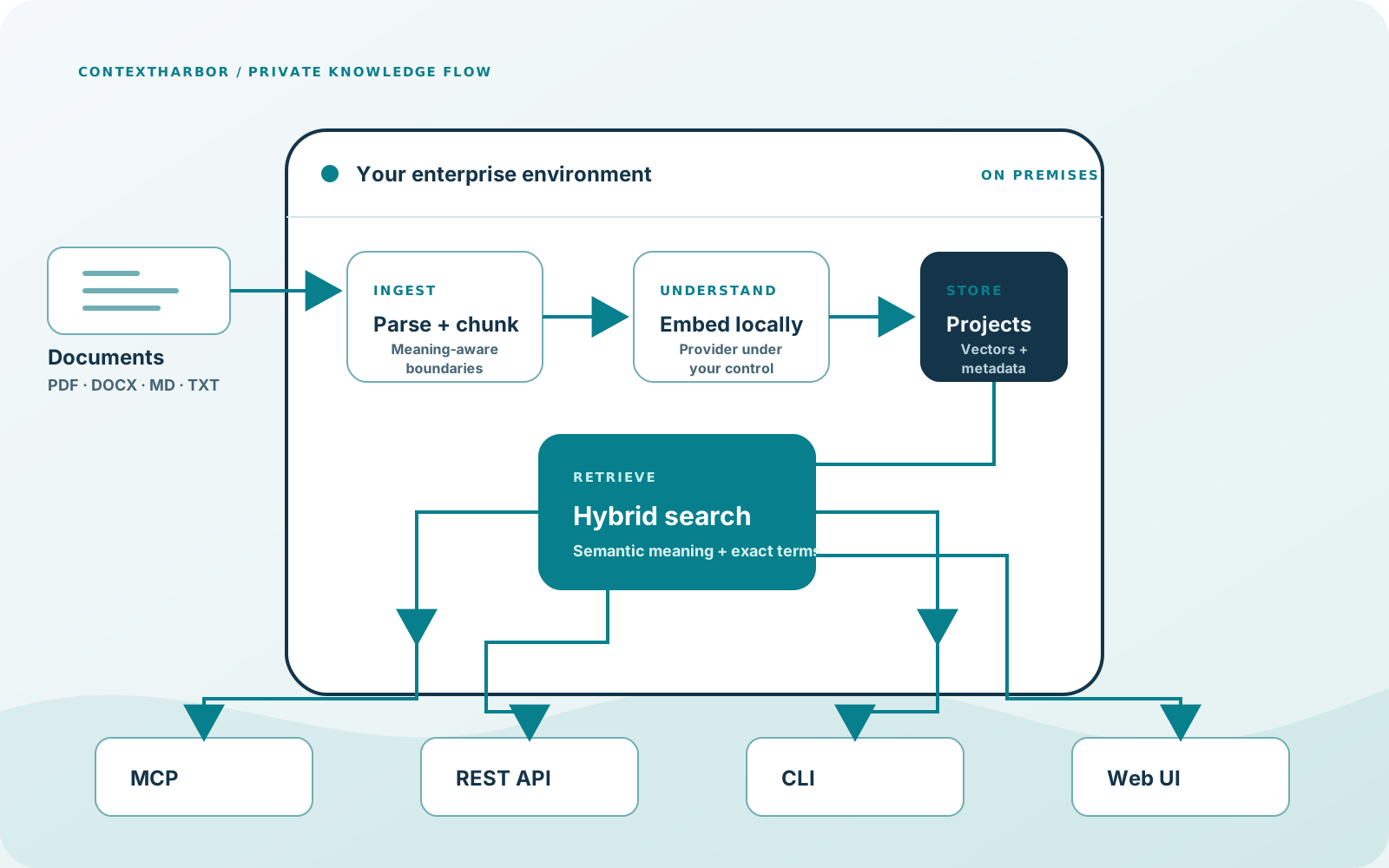
Private knowledge promise
Run storage, parsing, embedding, and retrieval in the environment your organization controls.
Balance semantic meaning with exact-term matching, quality filtering, and optional reranking.
Expose the same knowledge layer through the Web UI, REST API, CLI, Remote MCP, and stdio MCP.
Platform
Start with project-scoped access and local retrieval. Add per-project enrichment, Streaming AI Answer, GitHub connectors, and administrator-approved external providers only when the workflow requires them.
Use the Web UI, REST API, CLI, Remote MCP, or stdio MCP over the same project-scoped retrieval engine.
Classify uploads with controlled document types and tags, apply per-type chunking profiles, and optionally infer query filters when an organization LLM is configured.
Combine semantic and exact-term retrieval with relevance-gap filtering, optional cross-encoder reranking, useful boosts, and source-backed results.
Use two-pass asynchronous enrichment: a static first pass keeps content searchable, while optional background LLM enrichment runs per project with progress visibility and fallback behavior. Streaming AI Answer generates an answer from retrieved project chunks and returns supporting sources.
Discover repositories and branches, scope a connector with an optional path prefix, and incrementally sync supported files through the normal Files and search pipeline.
Project namespaces, immutable embedding stamps, and scoped storage keep knowledge separate. Admin, manager, and viewer membership controls access, while MCP API-key ACLs limit remote MCP projects.
Each project can configure its embedding provider, model, and dimensions; changing them requires reindexing. Built-in local embeddings are available, while administrators can enable OpenAI-compatible embedding and LLM providers. External providers process only deliberately submitted requests.
Prometheus metrics export operational counters. Hourly usage rollups group activity by surface, API key, and route or tool name. The admin Observability UI presents Harbor traces, error summaries, latency, access, freshness, and evaluations. Aggregate health remains available separately at GET /status.
Why not build your own?
Building a RAG system requires decisions across ingestion, retrieval, access, operations, and integration. ContextHarbor provides those capabilities as a deployable product.
Retrieval transparency
ContextHarbor exposes operational and quality metrics so you can measure retrieval effectiveness, not just assume it works.
Request counts, MCP tool call volumes, error rates by surface, and retrieval quality signals such as latency, top-1 score, score gap, and zero-result rate are exportable to your Prometheus monitoring stack.
Hourly usage rollups by surface, API key, and route or tool name. They report counts and latency without attributing activity to projects.
Run Recall@5, Recall@10, and MRR benchmarks against gold-set evaluation files to measure retrieval quality before and after changes.
The main dashboard shows in-flight requests, the high-water mark, and failed-call totals. Aggregate API, MCP, and Web UI health is available separately at GET /status. The admin Observability UI covers traces, errors, latency, access, freshness, and evaluations.
Product evidence
These screenshots show the actual portal mechanics: dashboard, project workspaces, hybrid search, and MCP setup.
The live dashboard keeps projects, document activity, and system status visible.
Deployment and control
The deployment layer keeps data, access, and retrieval inside one controlled system.
Commercial engagement
Start with the boundary, the knowledge sources, and the workflows that need reliable retrieval.
Assess knowledge sources, security boundaries, and AI workflows.
Deploy the platform and approved embedding configuration.
Integrate business applications, agents, and team workflows.
Support adoption, operational handoff, and further capability.
PricingOn request
ContextHarbor
Start with your deployment boundary, knowledge sources, and the workflows that need reliable retrieval.
Request a consultationSee how it works